
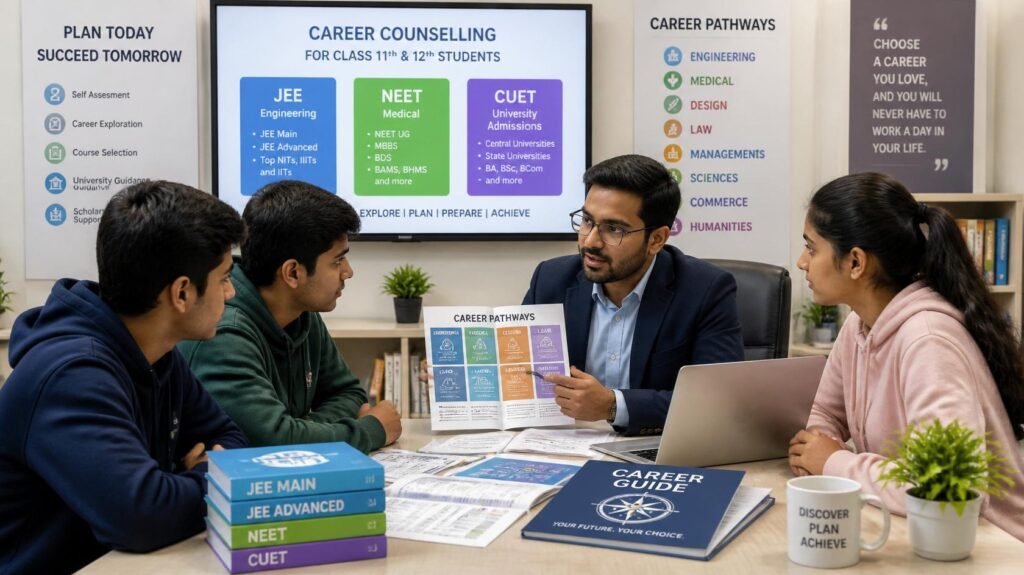
Class 11 and 12 are not just about textbooks and mock tests — they are the years that quietly shape a student’s entire future. Between coaching classes, mock papers and an avalanche of career options, most students are left juggling pressure from all sides without a clear sense of direction. This is exactly where career counselling for classes 11-12 becomes a game-changer. It doesn’t just help students pick between engineering, medicine or a general degree — it helps them understand why a particular path suits them, long before they fill out an entrance exam form. At Tera Parichay, we believe this decision deserves more than guesswork; it deserves science, data and genuine guidance.
Why Class 11-12 Is the Real Turning Point
The shift from Class 10 to Class 11 is where subject streams get locked in, and by Class 12, students are expected to have picked an entrance exam, a target score, and often a backup plan too. Yet very few students at this stage have actually explored their own aptitude, interests or personality fit before jumping into JEE, NEET or CUET preparation. The result? Burnout, misaligned career choices, and years spent chasing a path that was never truly theirs. Structured guidance at this exact stage prevents these expensive detours.
The Real Problem with “Exam-First” Thinking
Most students choose an entrance exam because it’s popular, because a sibling took it, or because parents assume it guarantees stability. Rarely does anyone ask: does this student actually have the aptitude, temperament and interest for this field? Preparing for JEE without a genuine inclination toward engineering, or attempting NEET without real interest in biology and patient care, often leads to years of frustration — even after clearing the exam. This is precisely the gap that professional guidance is designed to close.
How Career Counselling Reframes the Exam Journey
Good counselling doesn’t discourage ambition — it sharpens it. Instead of asking “which exam should I take?”, the right process asks “which career truly fits me, and which exam gets me there efficiently?” This reframing changes everything:
- Students prepare with purpose instead of pressure
- Parents get objective, data-backed clarity instead of assumptions
- Exam choices (JEE, NEET, CUET, CLAT, or design/management entrances) become informed decisions, not defaults
Where the Groundwork Actually Begins
Effective decision-making for JEE, NEET or CUET doesn’t start in Class 11 — ideally, it starts a little earlier, with a solid assessment of aptitude, interest and personality. This is why many families begin the process with tools like the career counselling for classes 11-12 approach as an extension of assessments done in Class 9 and 10. When a student enters Class 11 already aware of their strengths — whether analytical, verbal, spatial or interpersonal — choosing between a science, commerce or humanities-based entrance exam becomes far less confusing and far more evidence-based.
Matching Aptitude to the Right Entrance Exam
Not every student who scores well in Class 10 is automatically suited for JEE-level mathematics or NEET-level biology under intense competitive pressure. A well-designed counselling process evaluates:
- Logical and quantitative aptitude — relevant for JEE, engineering and data-driven careers
- Biological and analytical interest — relevant for NEET, medicine and allied health sciences
- Verbal reasoning and general awareness — relevant for CUET and humanities or commerce-based degrees
- Stress tolerance and consistency — a factor that affects performance in every long-format competitive exam
This kind of mapping ensures students aren’t preparing blindly; they’re preparing for an exam that genuinely complements how they think and work.
Building a Roadmap, Not Just a Study Plan
Choosing the right exam is only half the equation — the other half is building a realistic, personalised roadmap toward it. This includes setting milestones, understanding backup options, and aligning subject choices with long-term goals rather than short-term trends. A thoughtful career and study roadmap helps students break down a two-year preparation window into achievable phases, so JEE, NEET or CUET preparation feels structured instead of overwhelming. Without this kind of planning, even genuinely talented students can lose momentum simply because there was no clear map to follow.
The Emotional Side Nobody Talks About
Entrance exam preparation isn’t only an academic challenge — it’s an emotional one. Comparison with peers, family expectations, and the sheer scale of competition can chip away at a student’s confidence, regardless of how capable they are. Career counselling sessions often double up as a safe space where students voice doubts they wouldn’t share with parents or teachers, whether it’s fear of failure, confusion about backup options, or simply not knowing if they’ve chosen the right path at all. Addressing this emotional layer is just as important as academic strategy.
Why Expert Guidance Makes a Measurable Difference
Parents and students often underestimate how much clarity a single structured counselling process can bring. With expert career guidance for Class 11 and 12, students move from vague ambition (“I want to do something in science”) to specific, actionable direction (“I want to pursue biotechnology through NEET-adjacent options” or “I’m suited for a design career, so I should explore NID/UCEED alongside CUET”). This clarity doesn’t just reduce stress — it often improves exam performance itself, because focused preparation is almost always more effective than scattered effort.
Making the Right Choice, Not Just the Popular One
Ultimately, the goal of career counselling for classes 11-12 isn’t to push every student toward JEE or NEET simply because they’re widely regarded as prestigious. It’s to ensure that whichever exam a student prepares for — engineering, medical, law, design, or a CUET-based university path — it’s a decision rooted in genuine self-awareness rather than social pressure. At Tera Parichay, our approach combines psychometric assessment, one-on-one counselling and long-term planning to help students walk into their entrance exams with confidence, clarity and a career path that’s authentically their own.
Frequently Asked Questions
This is when subject streams get locked in and students are expected to commit to an entrance exam and target score, yet most haven’t actually explored their own aptitude or interests before diving into JEE, NEET, or CUET preparation.
Students often pick JEE, NEET, or CUET because a sibling took it or parents assume it guarantees stability — without checking if they actually have the aptitude, temperament, and interest for that field, which can lead to years of frustration even after clearing the exam.
Instead of “which exam should I take?”, counselling reframes it as “which career truly fits me, and which exam gets me there efficiently?” — turning exam prep from a default choice into an informed decision.
Ideally, the groundwork starts earlier — many families begin the process as an extension of assessments already done in Classes 9 and 10, so students enter Class 11 already aware of their analytical, verbal, spatial, or interpersonal strengths.
It evaluates factors like logical and quantitative aptitude (relevant to JEE), biological and analytical interest (relevant to NEET), verbal reasoning and general awareness (relevant to CUET), and stress tolerance under long-format competitive pressure.
Choosing the exam is only half the equation — building a realistic roadmap with milestones, backup options, and subject alignment is equally important for turning a two-year prep window into structured, achievable phases.
No — it carries a significant emotional weight too, including peer comparison, family expectations, and fear of failure. Counselling sessions often serve as a safe space for students to voice doubts they might not share with parents or teachers.
Yes — clarity about one’s direction reduces stress and sharpens focus, and this kind of focused preparation tends to be more effective than scattered, ambition-without-direction effort.
No — the goal isn’t to funnel everyone toward “prestigious” exams, but to ensure that whichever path a student pursues (engineering, medical, law, design, or a CUET-based route) is rooted in genuine self-awareness rather than social pressure.
It blends psychometric assessment, one-on-one counselling, and long-term roadmap planning to help students approach their entrance exams with clarity and a path that’s authentically their own.